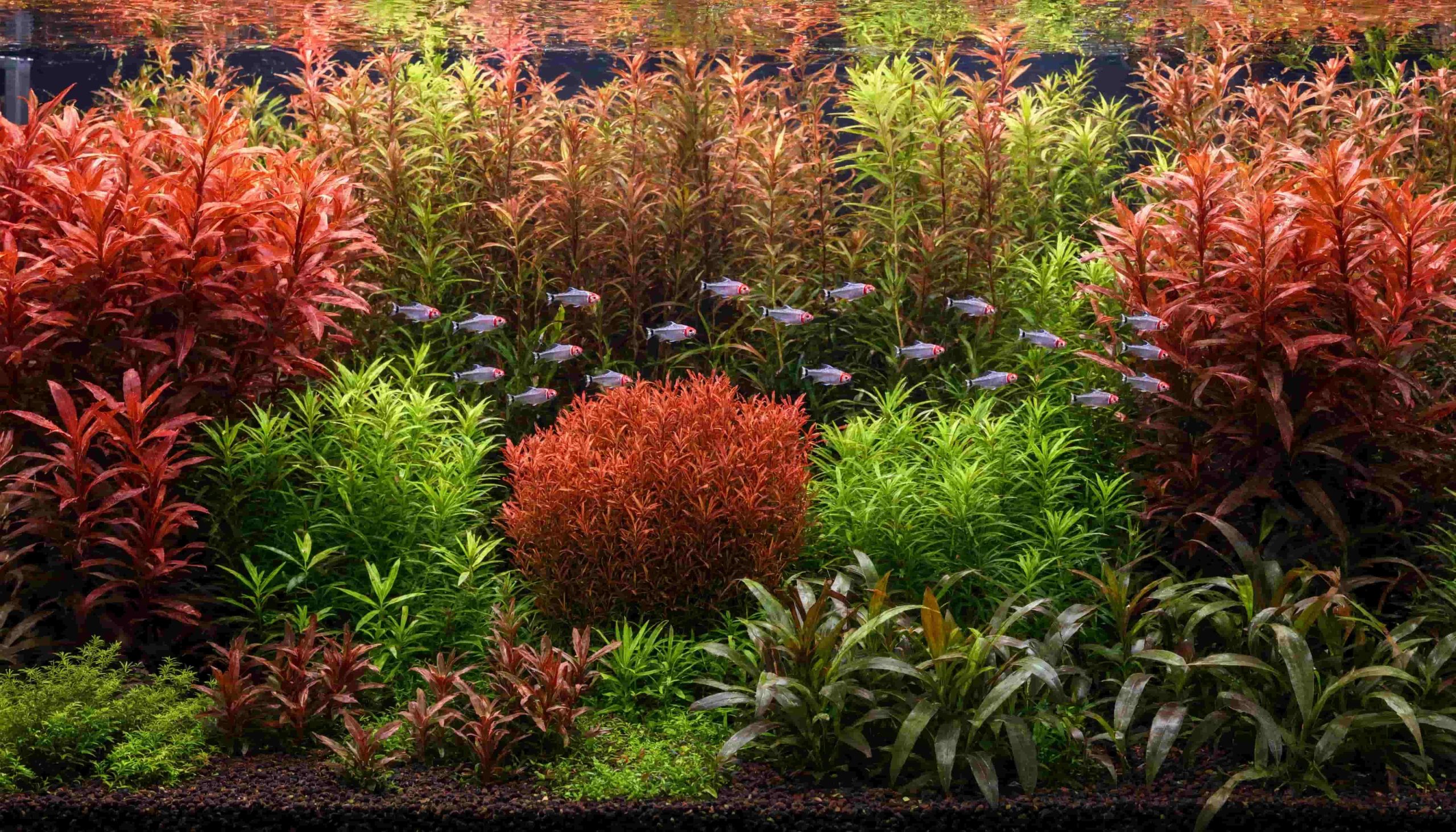
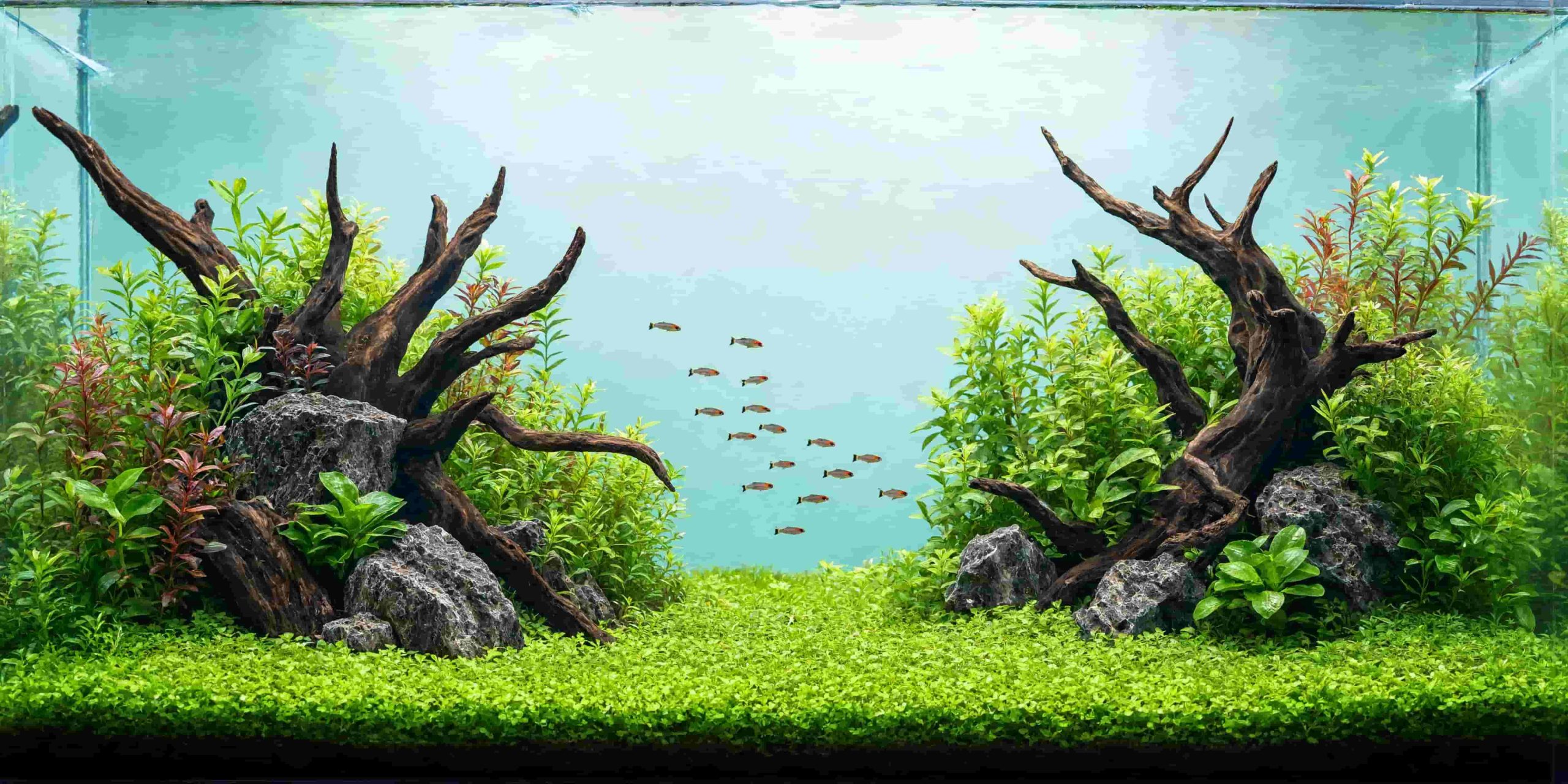
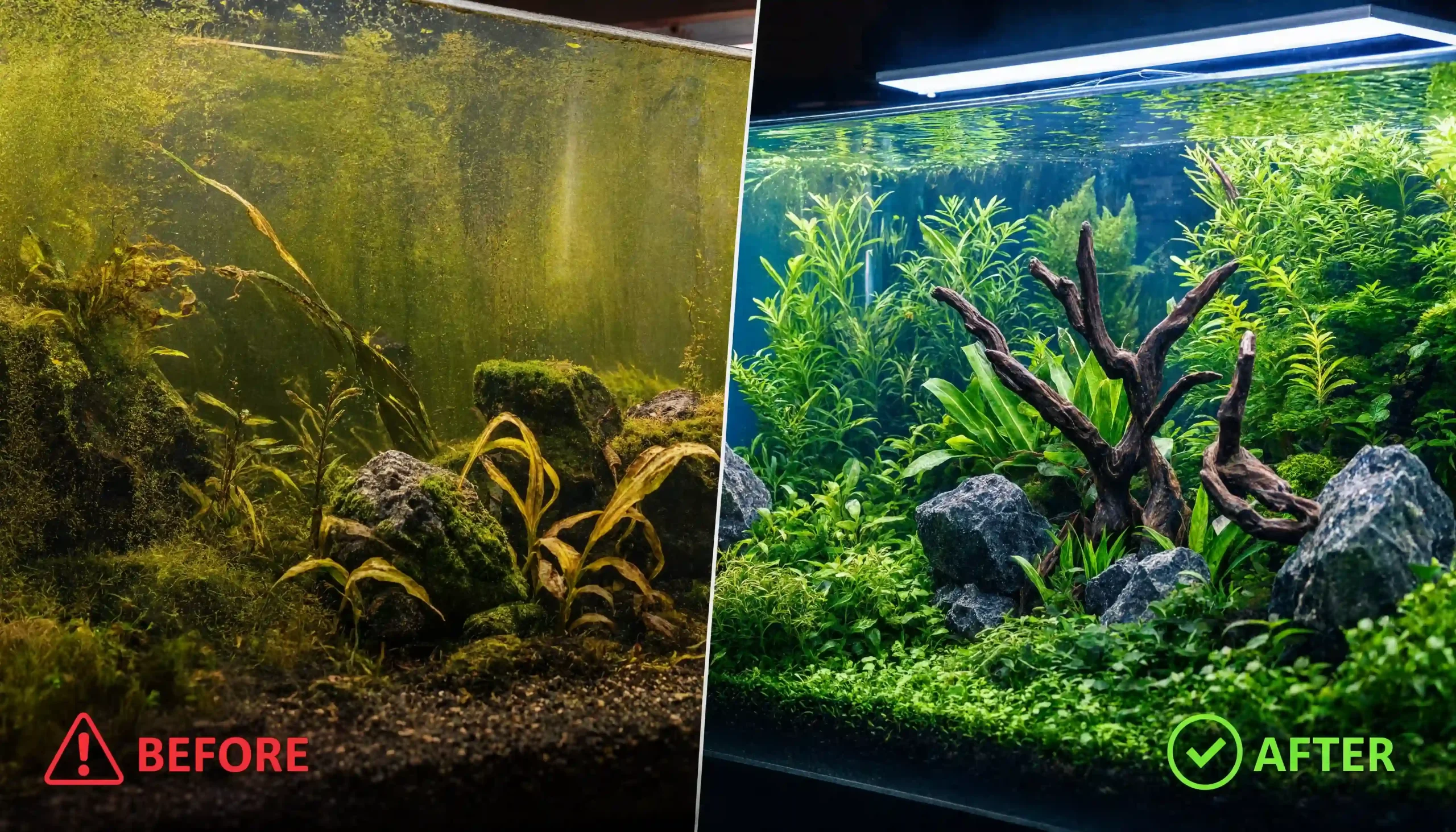
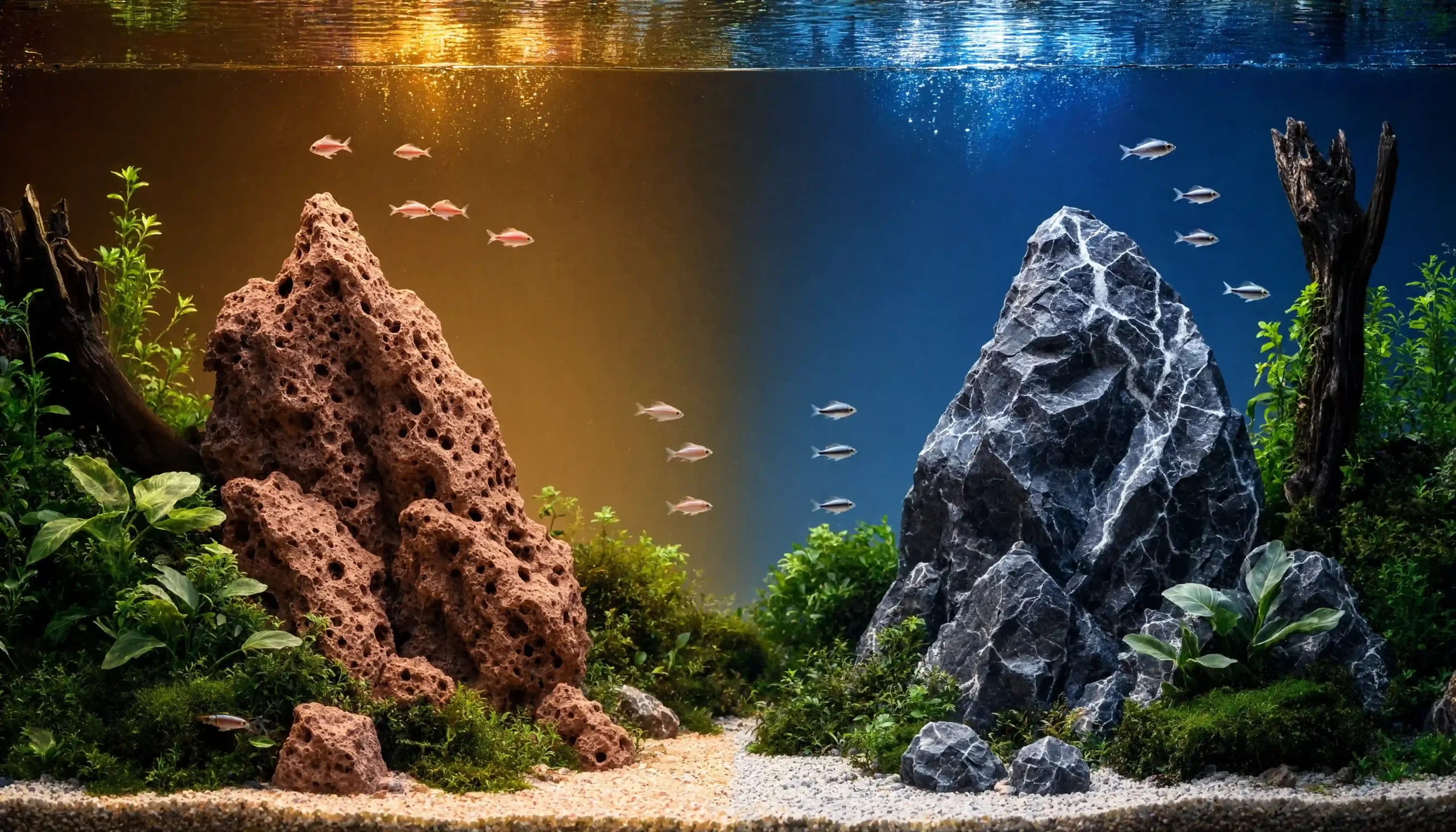
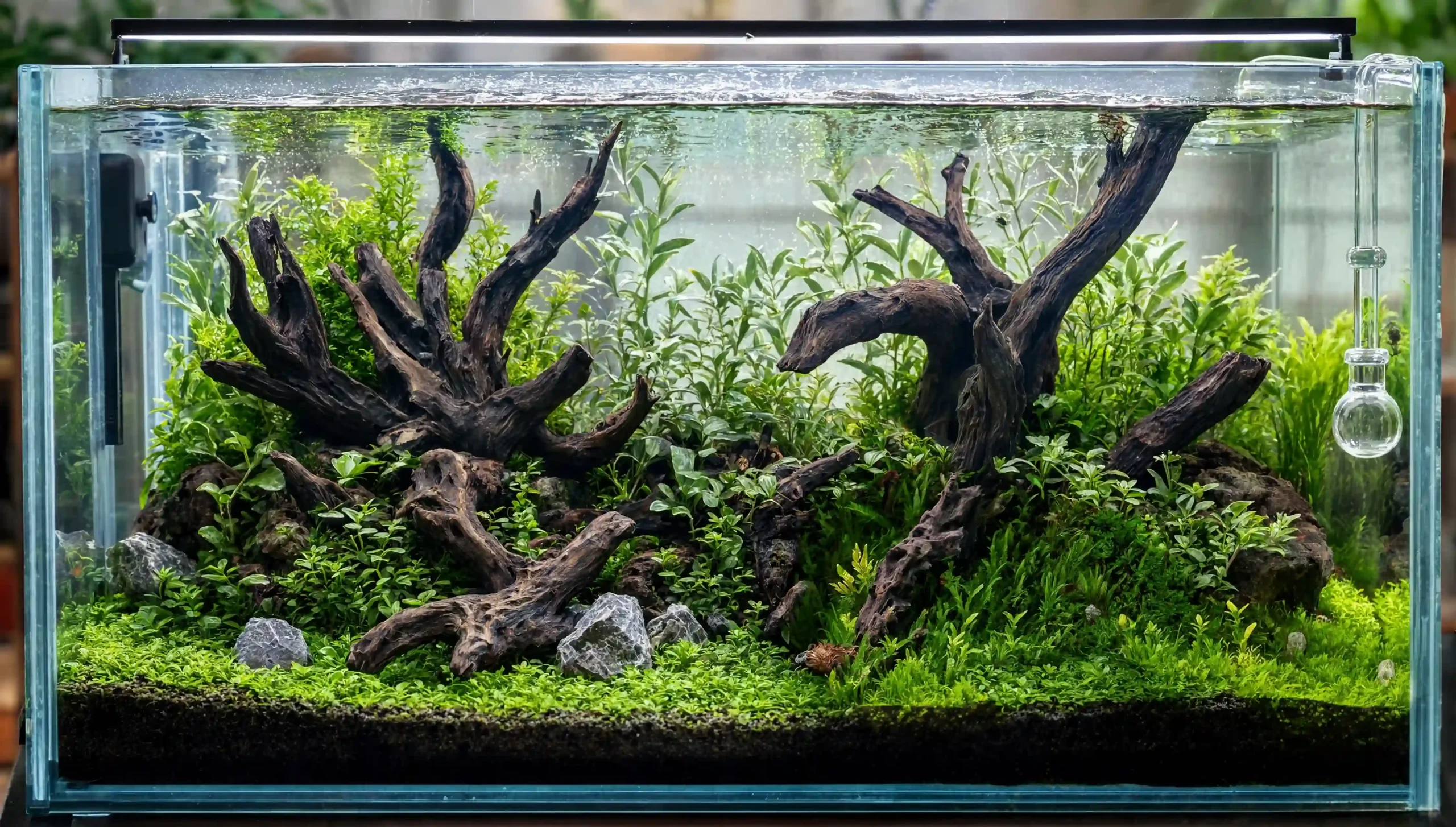
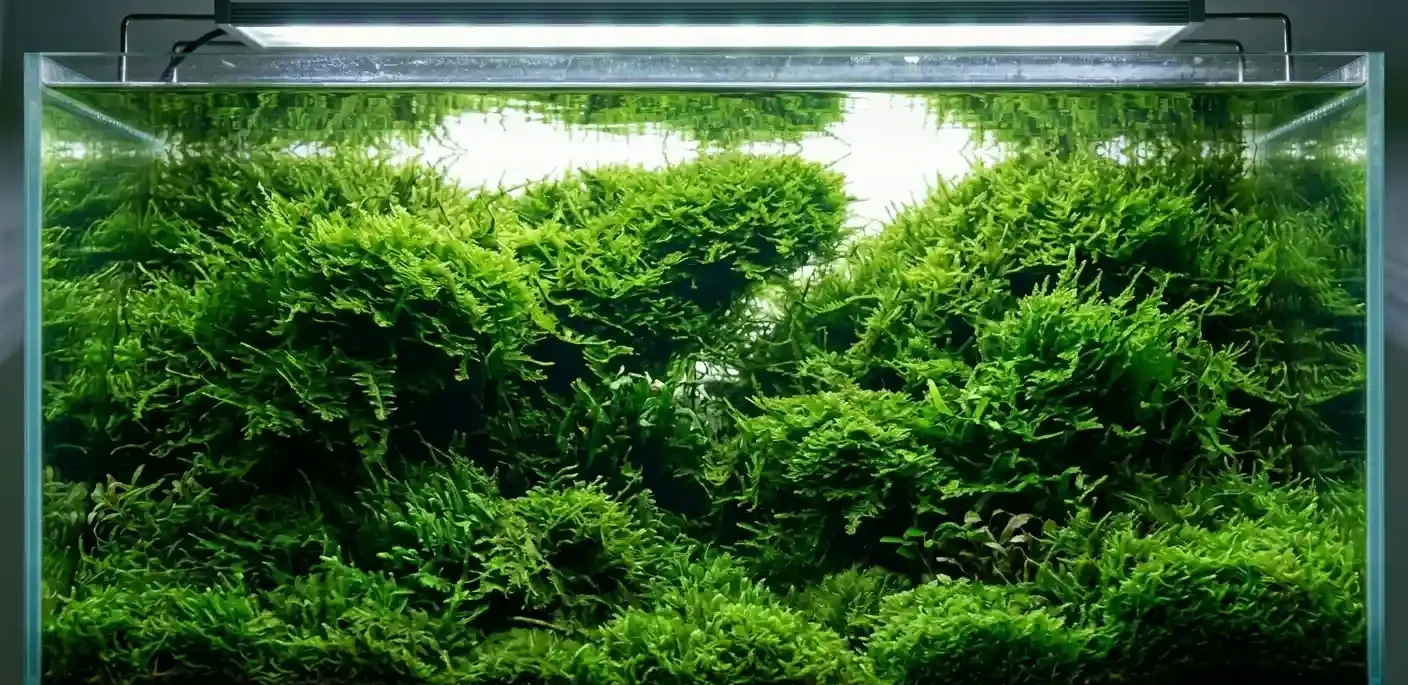
Many people think that growing aquarium plants requires expensive CO₂ systems, special lighting, and advanced aquarium knowledge. This belief often discourages beginners from starting a planted aquarium. The truth is much simpler. Many aquarium plants can grow successfully without CO₂ injection and still create a beautiful underwater environment.
Low-tech aquarium plants are perfect for hobbyists who want a natural-looking aquarium without spending too much money. These plants are generally easy to care for, adaptable to different water conditions, and suitable for beginners. They help improve water quality, provide shelter for fish, and make an aquarium look more vibrant and alive.
If you’re planning your first planted tank or want low-maintenance plants for an existing aquarium, the following ten plants are excellent choices.
Why Low-Tech Aquarium Plants Are Perfect for Beginners
One of the biggest advantages of low-tech aquarium plants is their simplicity. Unlike demanding species that require constant monitoring, these plants can thrive with basic care.
They usually grow well under standard aquarium lights and do not need additional carbon dioxide systems. This means lower setup costs and less maintenance. Most low-tech plants are also forgiving when beginners make small mistakes with lighting, fertilization, or water changes.
Another benefit is stability. Since these plants grow at a moderate pace, they are easier to manage and less likely to experience sudden problems. For anyone entering the planted aquarium hobby, starting with low-tech plants is often the best decision.
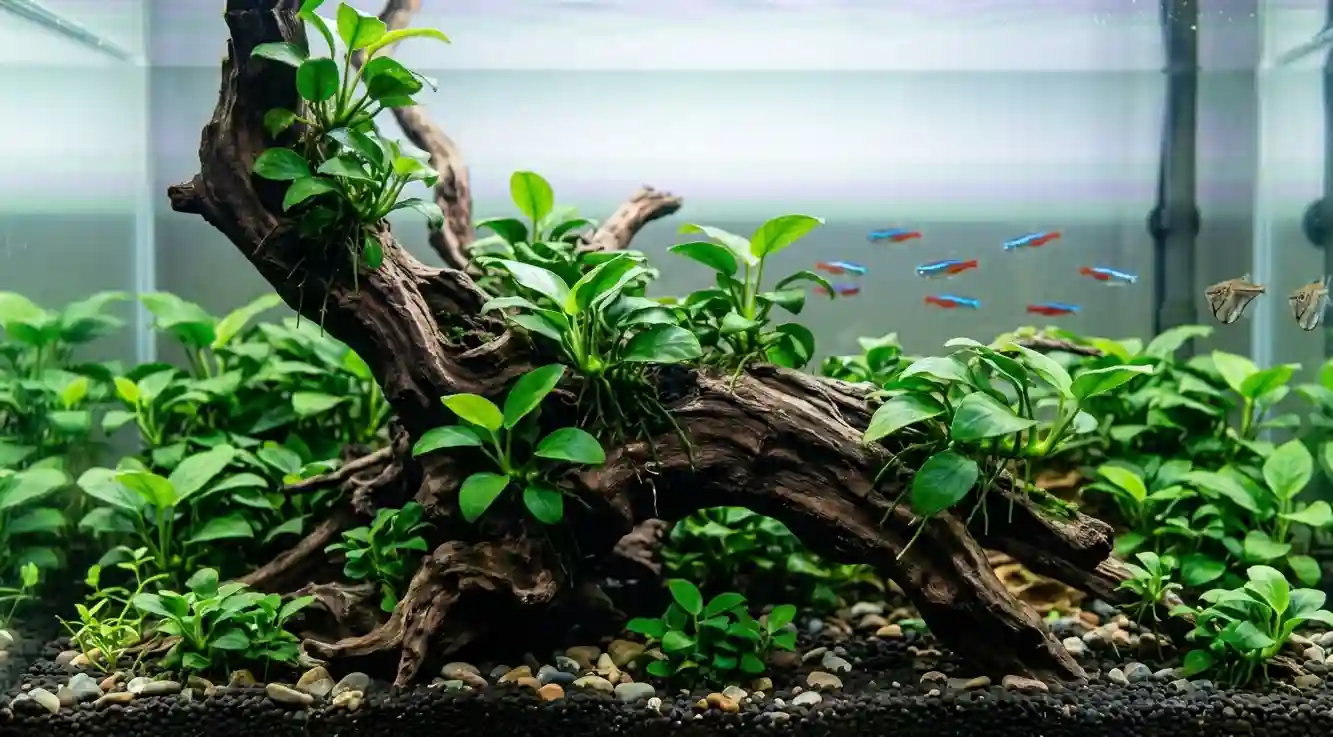
Anubias Nana
Anubias Nana is one of the easiest aquarium plants for beginners. It grows slowly, requires very little maintenance, and can thrive without a CO₂ system. Its thick dark-green leaves make it highly durable and resistant to damage from fish. This plant grows best when attached to driftwood or rocks rather than planted directly into the substrate. Because it tolerates low lighting conditions, it is perfect for hobbyists setting up their first planted aquarium. Once established, Anubias Nana can remain healthy for years with minimal care, making it one of the best low-maintenance aquarium plants available.
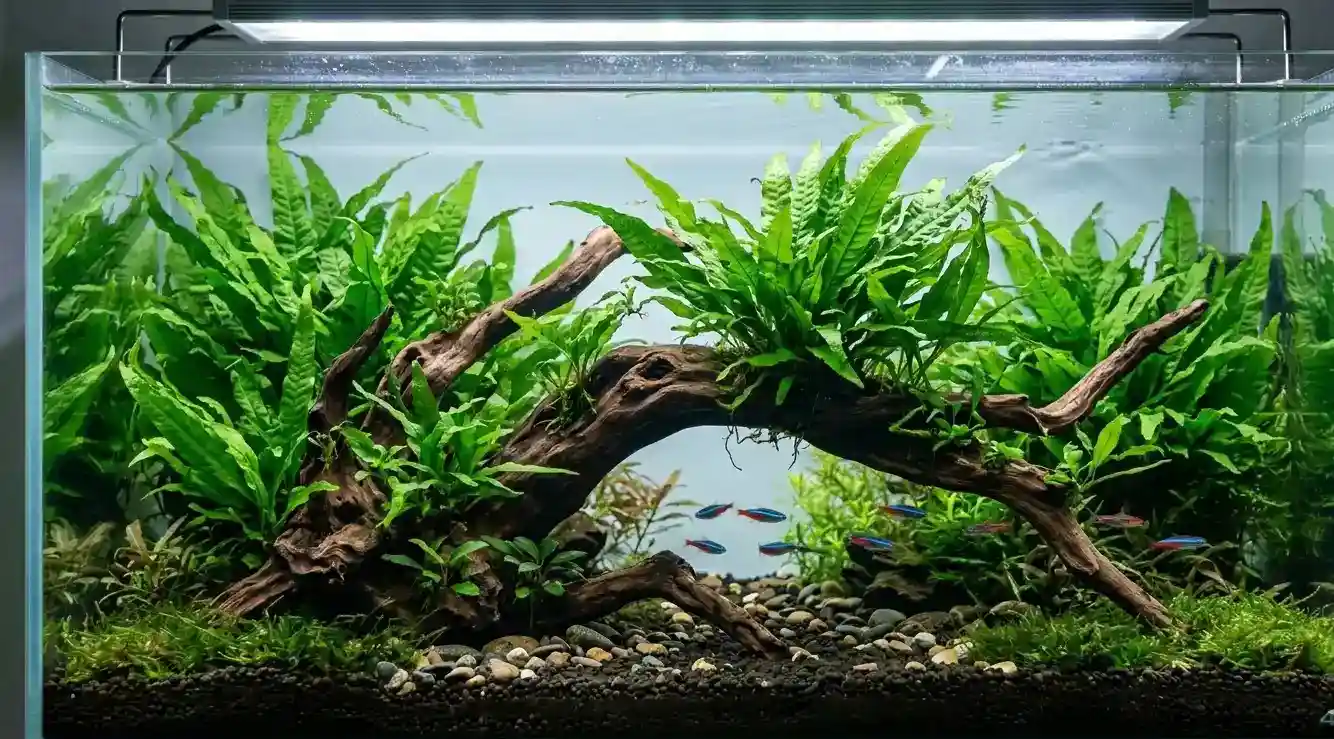
Java Fern
Java Fern is another popular choice for low-tech aquariums. Known for its long flowing leaves, it adapts well to different water conditions and does not require injected CO₂. Like Anubias, it should be attached to hardscape rather than buried in substrate. Java Fern grows steadily under low to moderate lighting and is capable of producing baby plants directly from mature leaves. This easy propagation method allows hobbyists to expand their plant collection without additional cost. Its hardy nature makes it one of the most beginner-friendly aquarium plants.
Java Moss
Java Moss is a versatile aquatic plant that can be attached to rocks, wood, and decorations. It creates a natural appearance while providing shelter for shrimp, fry, and small fish. One of its biggest advantages is its ability to grow in almost any aquarium condition. It does not require special lighting or CO₂ injection to thrive. Over time, Java Moss develops into a dense green covering that enhances the overall look of the aquarium. Regular trimming helps maintain its shape and prevents excessive growth.

Cryptocoryne Wendtii
Cryptocoryne Wendtii is a favorite among aquascaping enthusiasts because of its attractive leaf texture and ease of care. Available in green, brown, and bronze varieties, it adds depth and color variation to planted aquariums. The plant performs well in low-tech setups and grows steadily without CO₂. New hobbyists should not worry if some leaves melt after planting, as this is part of the plant’s natural adjustment process. Once established, Cryptocoryne Wendtii becomes one of the most reliable aquarium plants.

Vallisneria
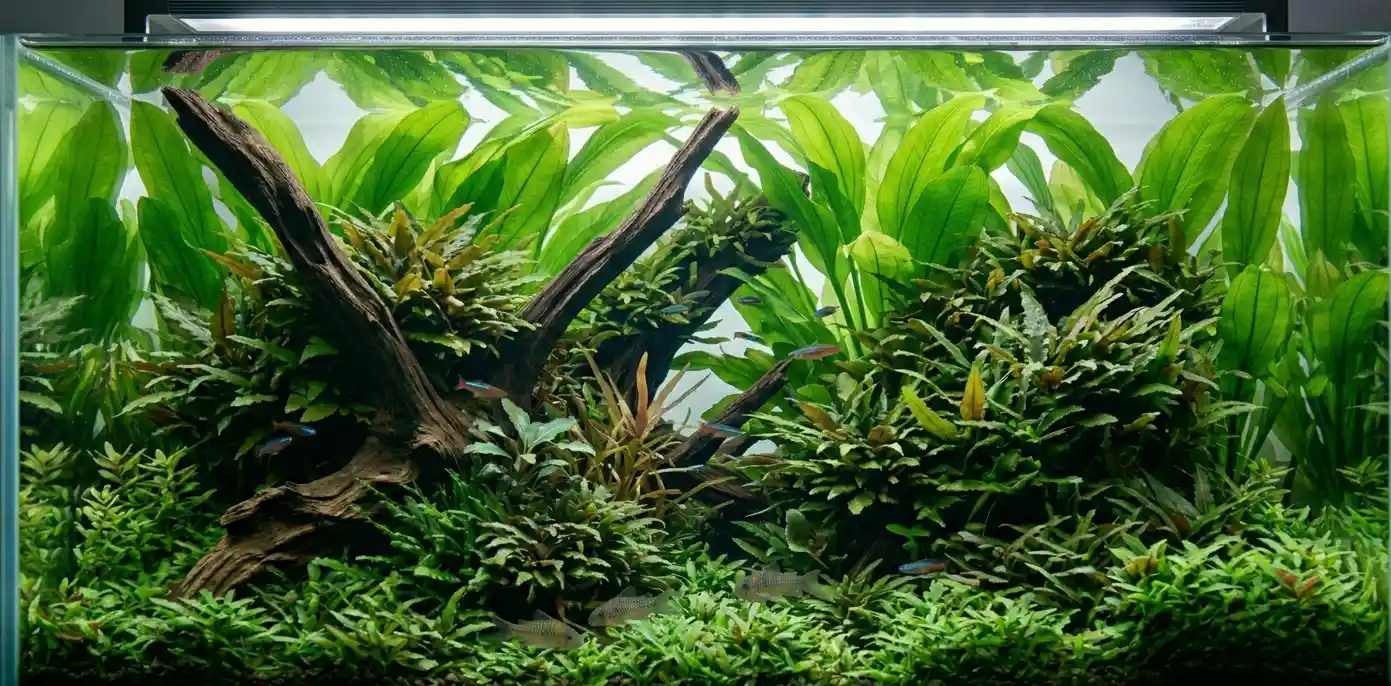
Vallisneria is known for its long ribbon-like leaves that create a beautiful underwater jungle effect. It spreads through runners and can quickly fill background areas of the aquarium. Because of its fast growth, Vallisneria helps absorb excess nutrients and contributes to better water quality. It grows successfully without CO₂ and requires only moderate lighting. Many aquarium hobbyists use Vallisneria to create natural-looking backgrounds and provide additional cover for fish.

Amazon Sword
Amazon Sword is a classic aquarium plant often used as a centerpiece. Its broad leaves create a lush appearance and provide hiding places for fish. Although it benefits from nutrient-rich substrate, it does not require injected CO₂ to grow successfully. As the plant matures, it becomes one of the most striking features in the aquarium. Amazon Sword is ideal for medium and large tanks where it has enough room to develop fully.
Bacopa Caroliniana
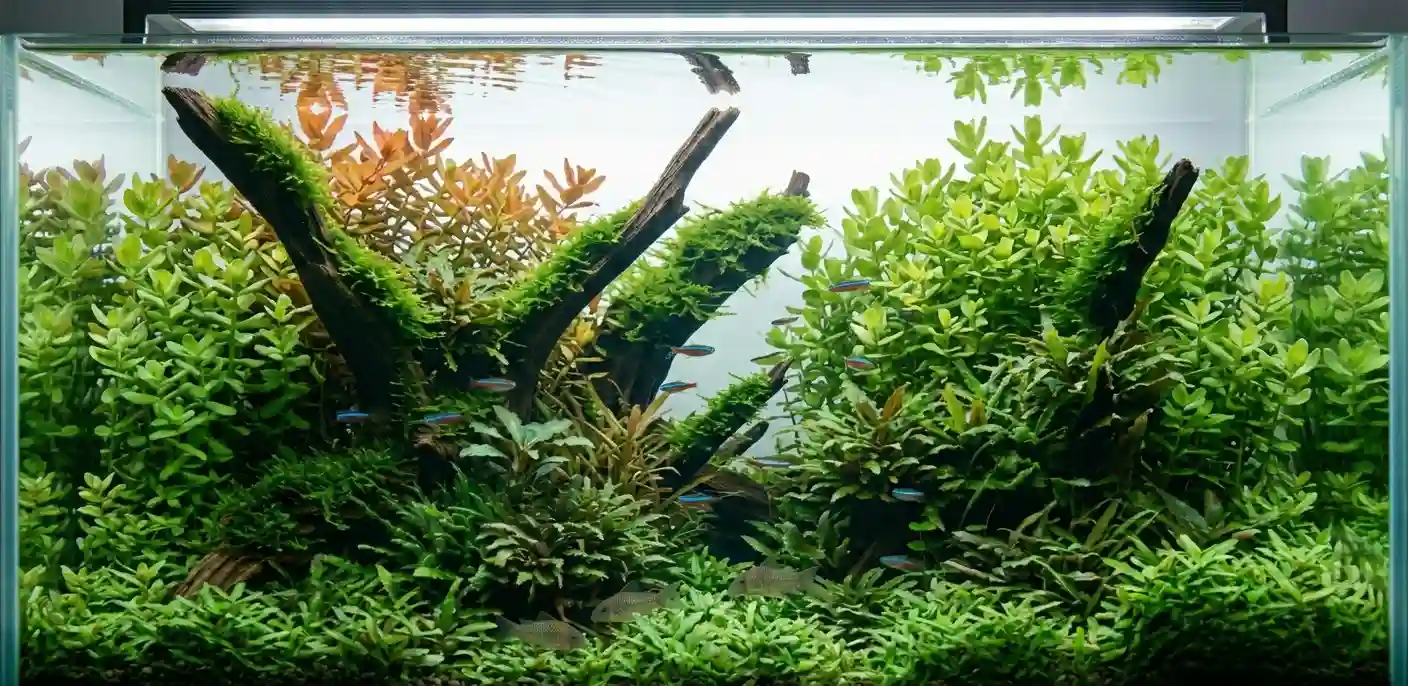
Bacopa Caroliniana features thick stems and rounded leaves that provide a refreshing contrast to finer-leaved plants. It is easy to maintain and grows steadily under moderate lighting conditions. This plant can be propagated by simply cutting and replanting healthy stems. Its upright growth habit makes it suitable for midground and background placement. Because it adapts well to different aquarium conditions, Bacopa Caroliniana is a great option for beginners.
Water Wisteria
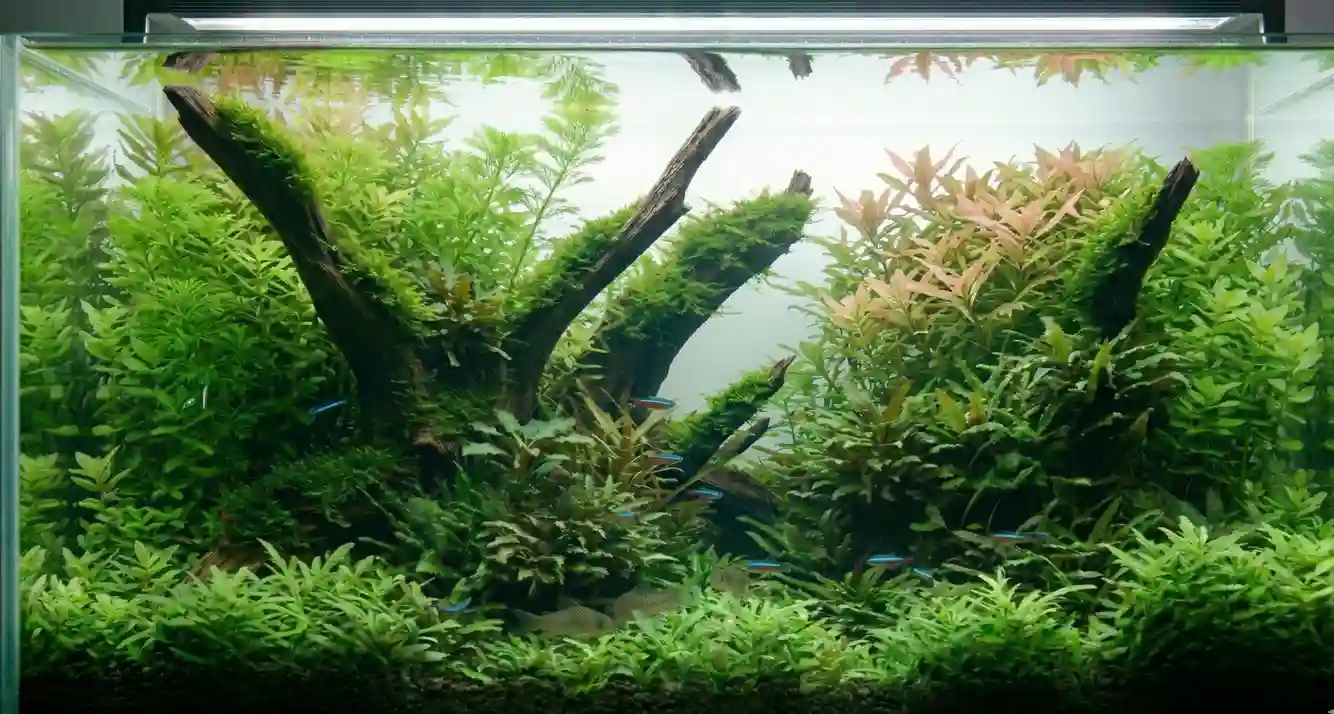
Water Wisteria is a fast-growing aquarium plant that adds texture and fullness to planted layouts. Its delicate leaves create a soft appearance while helping improve water quality by consuming excess nutrients. The plant can be rooted in substrate or left floating near the surface. Its rapid growth makes it useful for newly established aquariums. Water Wisteria remains one of the most recommended plants for beginner hobbyists.

Hygrophila Polysperma
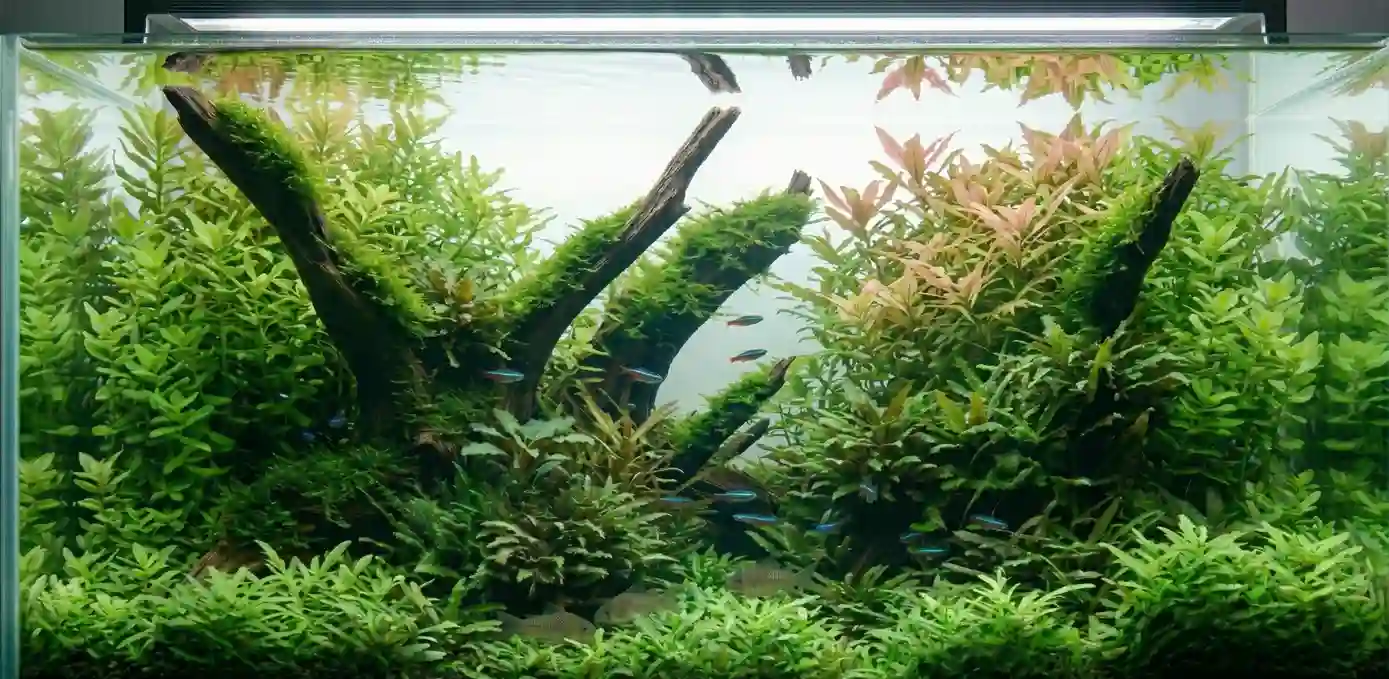
Hygrophila Polysperma is widely regarded as one of the easiest stem plants to grow. It adapts quickly to new aquariums and continues producing fresh growth even under basic conditions. Because it grows rapidly, it helps stabilize the aquarium and reduce nutrient imbalances. Regular trimming encourages denser growth and improves its appearance. For hobbyists looking for quick results, Hygrophila Polysperma is an excellent choice.
Limnophila Sessiliflora
Limnophila Sessiliflora is valued for its soft feathery leaves and graceful appearance. It grows quickly without requiring CO₂ injection and adapts well to low-tech setups. When planted in groups, it creates a dense green background that adds depth to the aquarium. Its fast growth also helps improve overall water quality. The combination of beauty and ease of care makes Limnophila Sessiliflora one of the best low-tech aquarium plants.
Quick Comparison of Low-Tech Aquarium Plants
| Plant Name | Light Requirement | CO₂ Needed | Placement | Growth Rate |
| Anubias Nana | Low-Medium | No | Foreground/Midground | Slow |
| Java Fern | Low-Medium | No | Midground/Background | Slow |
| Java Moss | Low | No | Hardscape/Foreground | Moderate |
| Cryptocoryne Wendtii | Low-Medium | No | Midground | Slow |
| Vallisneria | Low-Medium | No | Background | Fast |
| Amazon Sword | Medium | No | Background | Moderate |
| Bacopa Caroliniana | Medium | No | Midground | Moderate |
| Water Wisteria | Medium | No | Midground/Background | Fast |
| Hygrophila Polysperma | Low-Medium | No | Background | Fast |
| Limnophila Sessiliflora | Medium | No | Background | Fast |
Final Thoughts
Creating a beautiful planted aquarium does not require expensive CO₂ systems or advanced equipment. Many aquatic plants naturally adapt to low-tech conditions and continue growing with minimal care.
Anubias Nana, Java Fern, Java Moss, Cryptocoryne Wendtii, Vallisneria, Amazon Sword, Bacopa Caroliniana, Water Wisteria, Hygrophila Polysperma, and Limnophila Sessiliflora are all excellent choices for beginners who want healthy plant growth without additional complexity.
Start with a few of these plants, maintain stable aquarium conditions, and be patient. Over time, your aquarium will develop into a lush underwater landscape that enhances both the appearance of the tank and the well-being of its inhabitants.